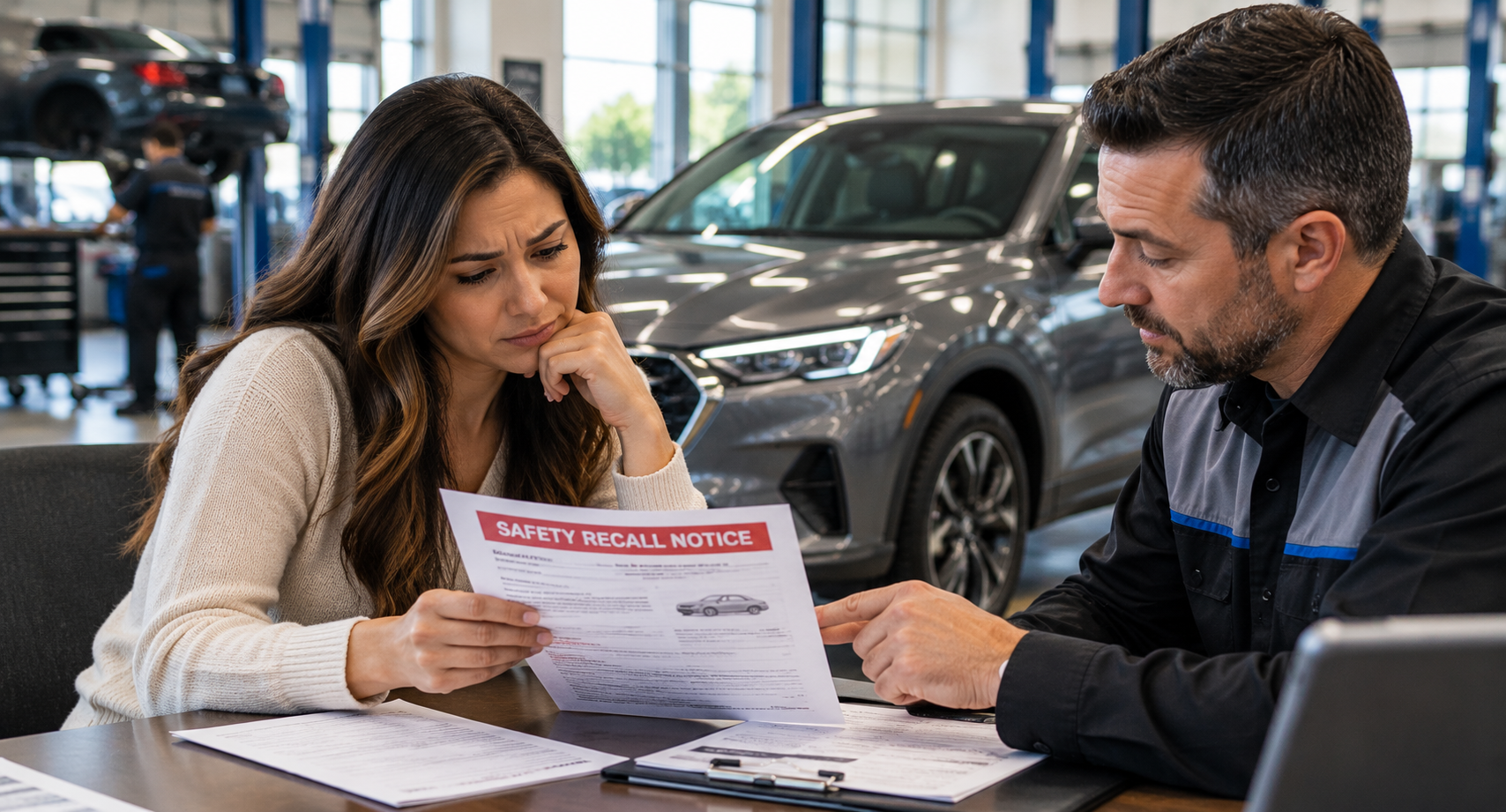
A manufacturer announces a safety recall, you take your vehicle to an authorized dealership, and the dealer performs the required repair. You expect the problem to be over. But what happens when the same warning light, braking problem, electrical failure, engine issue, or other defect returns?
A completed recall repair does not necessarily mean that every potential warranty or lemon law issue disappears. A recall and a California Lemon Law claim address related but different questions. A recall generally addresses a safety defect affecting a group of vehicles, while a lemon law claim focuses more closely on the problems with an individual vehicle, its warranty coverage, and whether the manufacturer was able to repair qualifying defects after a reasonable number of opportunities.
For drivers whose vehicles continue having problems after recall work, the next step is usually careful documentation. Repair orders, recall notices, photographs, videos, and a clear timeline can help show that the defect did not actually go away.
If you are already experiencing repeated problems, you can also read Signs You May Have a Lemon Car and What to Do About It.
What Is a Vehicle Safety Recall?
 A vehicle recall generally occurs when a manufacturer or the National Highway Traffic Safety Administration determines that a vehicle or vehicle equipment contains a safety-related defect or fails to comply with applicable federal motor vehicle safety standards.
A recall may involve millions of vehicles or a relatively small group. Problems can involve brakes, steering, airbags, electrical systems, batteries, software, cameras, fuel systems, seat belts, or many other components.
According to the National Highway Traffic Safety Administration, vehicle owners can check for open recalls using a VIN or license plate. When a vehicle has an open safety recall, owners should follow the manufacturer’s instructions and arrange for the recall remedy.
Does a Recall Prevent a Lemon Law Claim?
Not necessarily. The existence of a recall does not by itself determine whether an individual vehicle qualifies under California Lemon Law.
A recall identifies a problem and provides a remedy for affected vehicles. A lemon law dispute generally examines whether a defect covered by the manufacturer’s warranty could be repaired after a reasonable number of attempts and whether other applicable requirements are satisfied.
This distinction becomes particularly important when a dealership completes a recall repair but the same problem returns.
For example, suppose a manufacturer recalls certain vehicles because they may unexpectedly lose power. The owner takes the vehicle to the dealer, where technicians install replacement components or updated software. Two weeks later, the vehicle loses power again.
The fact that the recall procedure was completed does not change the fact that the owner is experiencing a continuing problem. The owner should return to an authorized repair facility, explain that the defect returned after the recall work, and obtain another repair order.
What if the Same Problem Returns After the Recall?
If a defect returns after recall work, treat the new incident seriously. Do not assume that you have to live with the problem simply because the dealership already performed the official recall remedy.
Return to an Authorized Repair Facility
Report the problem again and clearly explain that it returned after the recall repair. Give the service adviser the date of the previous repair if you have it.
Ask the dealership to describe your complaint accurately on the repair order. If the problem involves unexpected power loss, for example, the paperwork should say that the vehicle lost power rather than simply listing a vague description such as “customer requests inspection.”
Keep the Original Recall Repair Order
Do not discard the paperwork from the original recall visit. That record can establish when the manufacturer attempted the recall remedy and what work was performed.
The subsequent repair order can then help demonstrate that the same or a related symptom appeared afterward.
Document Warning Messages
Take photographs or videos of dashboard alerts when it is safe to do so. Some warnings disappear after restarting a vehicle, which can make intermittent problems difficult for technicians to reproduce.
Does a Recall Repair Count as a Repair Attempt?
A recall-related service visit may be relevant to a vehicle’s overall repair history, particularly when the recall work was intended to address the same defect the owner continues to experience. Whether a particular visit counts for a specific legal purpose depends on the facts and applicable law.
This is one reason owners should keep complete paperwork rather than focusing only on the number of dealership visits.
California’s Department of Consumer Affairs explains that the state’s Lemon Law concerns warranty defects that the manufacturer cannot repair after a reasonable number of attempts. The agency’s guidance also notes that what constitutes a reasonable number can depend on the circumstances.
You can read more about building a repair history in The Step-by-Step Process for Filing a Lemon Law Claim.
What if the Dealer Says the Recall Was Successfully Completed?
A dealer may correctly state that it performed the manufacturer’s specified recall procedure. That does not necessarily establish that a later symptom is imaginary or unrelated.
The dealership may need to diagnose whether the recall remedy failed, whether a replacement component is defective, whether the original diagnosis was incomplete, or whether another component is causing a similar symptom.
Owners should avoid arguing about the technical cause before the vehicle has been evaluated. Instead, describe what the vehicle actually does.
Focus on the Symptoms
Statements such as “the vehicle lost power while traveling approximately 50 mph” or “the brake warning appeared again after the recall repair” provide more useful information than simply telling the dealership that “the recall didn’t work.”
Specific symptoms can also make the repair history easier to compare later.
What if the Dealer Cannot Duplicate the Problem?
Intermittent defects are common in modern vehicles. Electrical failures, software problems, sensor malfunctions, and warning messages may appear unpredictably.
If the dealership cannot reproduce the defect, still ask for a repair order showing that you reported it. A documented visit can be useful even when technicians write “could not duplicate” or “no fault found.”
Photos, videos, app notifications, charging logs, or dashboard screenshots may also help demonstrate what happened outside the service department.
Recall Repairs and Software Updates
Not every recall requires a physical replacement part. Modern manufacturers increasingly use software updates as recall remedies for certain defects.
An authorized dealership may install new software, reprogram a control module, or recalibrate an electronic system. In some cases, manufacturers may be able to address particular issues through an over-the-air update.
If the same problem returns after the software remedy, document it just as you would a failed mechanical repair. Save update notifications and dealership paperwork showing what software was installed and why.
Can Multiple Recalls Make a Vehicle a Lemon?
Having several recalls does not automatically make a vehicle a lemon. A vehicle can have multiple recalls that are successfully repaired and never experience another related problem.
Likewise, another vehicle might have only one significant defect that repeatedly returns despite several attempts to fix it.
The more important questions generally involve the specific defect, applicable warranty coverage, repair attempts, time out of service, and how substantially the problem affects the vehicle.
How to Check Your Vehicle for Open Recalls
Owners can search for unrepaired recalls through the NHTSA recall lookup tool. You can search using your vehicle identification number or other supported vehicle information.
Your 17-character VIN can usually be found on the lower driver’s side of the windshield, inside the driver’s door area, or on registration and insurance documents.
Checking by VIN is particularly useful after purchasing a used vehicle because it can reveal whether there are open safety recalls that still require attention.
NHTSA also provides its SaferCar app, which can provide recall alerts for vehicles added by the user.
What Records Should You Keep After a Failed Recall Repair?
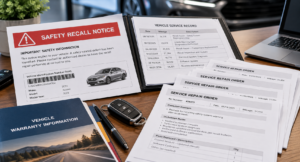
Keeping an organized file can make it easier to establish what happened and when. Useful documents may include:
- The manufacturer’s recall notice
- The original recall repair order
- Every subsequent repair order
- Warranty documents
- Vehicle purchase or lease paperwork
- Photos of dashboard warnings
- Videos showing recurring symptoms
- Emails and text messages with the dealership
- Manufacturer case numbers
- Towing and rental vehicle receipts
- Dates the vehicle was unavailable because of repairs
Create a Simple Repair Timeline
A timeline can be particularly useful when the vehicle has been serviced several times. Record the date, mileage, complaint, work performed, and whether the problem returned.
For example, a timeline might show the initial warning, the recall repair, a second occurrence three weeks later, another dealership visit, and a third occurrence after a software update.
This is much easier to understand than a stack of unrelated repair invoices.
What if the Manufacturer Denies Your Request?
A manufacturer may dispute whether the continuing problem is related to the recall, whether the defect is substantial, or whether enough repair opportunities have occurred. It may also argue that technicians cannot reproduce the complaint.
A denial does not necessarily resolve every issue. Review the manufacturer’s explanation carefully and compare it with your repair orders and warranty documents.
If you are already dealing with a denial, see What to Do When Your Manufacturer Denies Your Lemon Law Claim.
Can You Report a Recurring Safety Problem to NHTSA?
Yes. If you believe your vehicle has a safety defect, NHTSA allows consumers to report a vehicle safety problem.
NHTSA reviews consumer complaints as one source of information when investigating potential safety defects. A complaint is different from pursuing an individual lemon law claim, but reporting a genuine safety concern can help the agency identify patterns involving particular vehicles or equipment.
Why Recall History Matters When Buying a Used Car
 Recall research is also useful before buying a used vehicle. Ask for the VIN and check for open recalls before completing the purchase.
An open recall does not necessarily mean the vehicle is defective beyond repair. Recall remedies are designed to address identified safety problems. However, buyers should understand what work remains outstanding and whether the vehicle has a history of recurring problems.
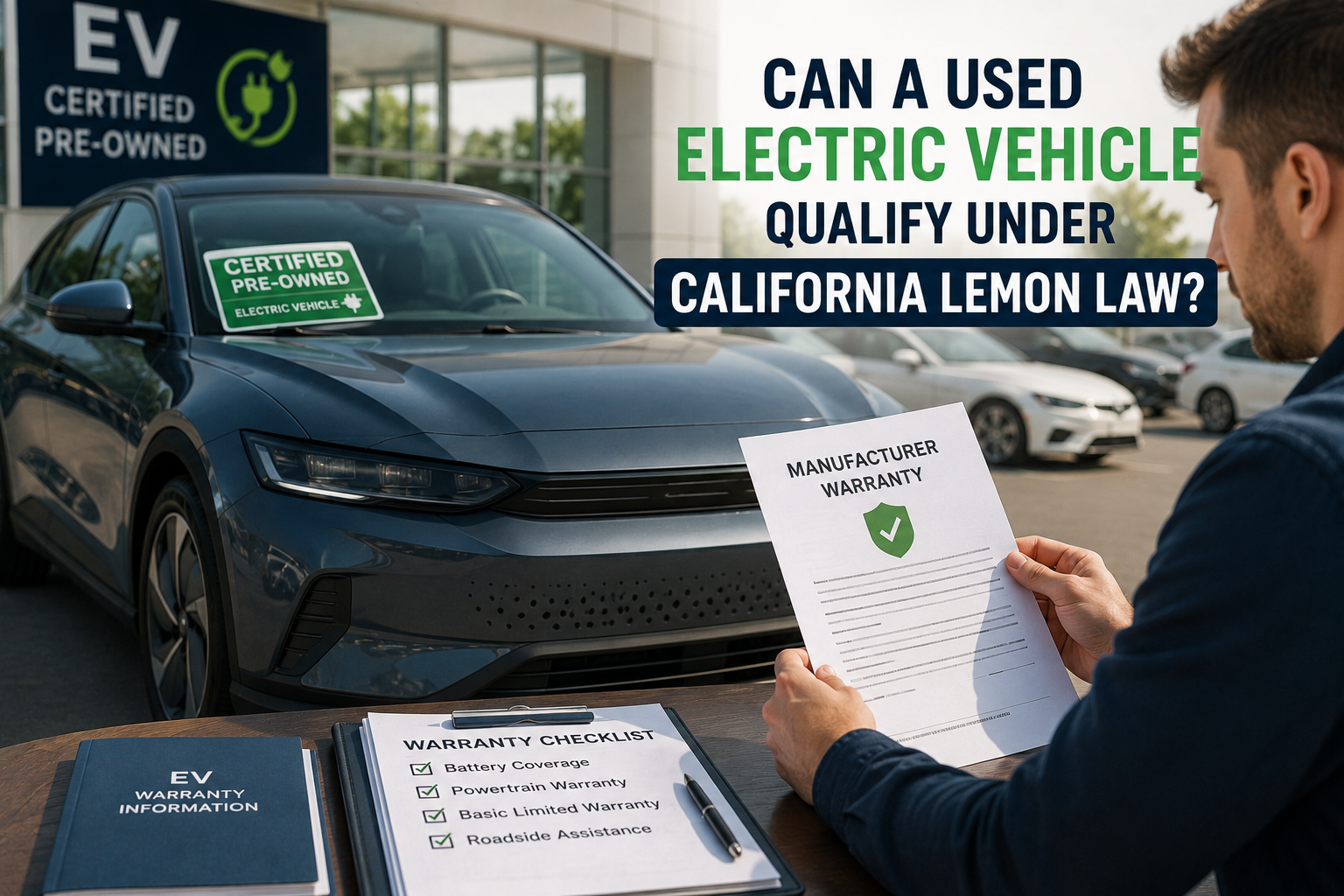
If you are shopping specifically for a used EV, warranty status can be especially important because battery, charging, and electronic components may have separate coverage periods.
Final Thoughts
A recall repair is supposed to address an identified problem, but occasionally a driver may experience the same or a related defect afterward. When that happens, do not assume the completed recall automatically ends the issue.
Return the vehicle for inspection, explain that the symptom returned after the recall work, and obtain written documentation. Keep the original recall notice, every repair order, photographs, videos, warranty records, and communications with the manufacturer.
A recall alone does not automatically make a vehicle a lemon, and an unsuccessful recall repair does not automatically establish a California Lemon Law claim. The specific defect, warranty coverage, number and nature of repair attempts, and other circumstances must be considered.
For official information, consumers can review the California Department of Consumer Affairs Arbitration Certification Program and the NHTSA recall and investigation resources.